Band Patch Maker
Your logo on a back patch or a 9 cm sew-on, kept to what a needle can stitch: pick how it is made, the shape, the size in millimetres, the border and the backing, and download the vector file, the thread list and the spec sheet a patch maker asks for.
No AI Drawn from real letter outlines and your own files; the SVG is clean vector a digitiser can use.
1. The patch
How it is made2. What goes on it
Make your logo in the free band logo maker and save it with a free account, and it appears here ready to stitch.
Pictures stay in your browser; nothing is uploaded to Moshradar.
3. The files
The pack: patch.svg (vector, in millimetres, one colour per thread), patch-300dpi.png, patch-mockup.png, threads.txt and a README with the size, border and backing. Send the SVG and the thread list to any patch maker.
Drag to move; the corners resize, the handle above turns. The dashed line is how close to the border a maker will stitch.
Layers
Patches it makes

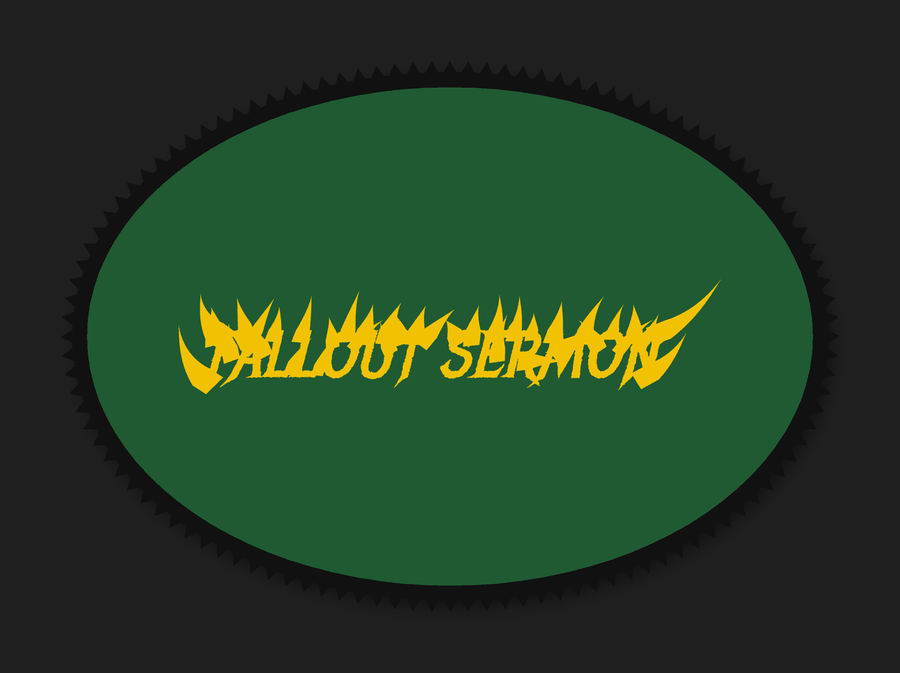
Designing a patch that stitches
A patch is not a print. Embroidery is thread laid down in stitches, and a satin stitch holds a line from about 1.3 mm to 12.5 mm wide: thinner than that it becomes a single run of thread, wider than that it is filled with a tatami stitch, which reads flatter. Letters need to be about 6 mm tall or the counters fill in. A gradient cannot be stitched at all; a photograph only as a printed patch.
Start from the size
A back patch at 30 cm will take almost any logo: the finest spike of a black metal logo is a millimetre or more at that size. The same logo on a 9 cm sew-on has lines a third of a millimetre wide, which the editor tells you about the moment you pick the size. Simplify the logo (the logo maker's merch pack has a patch version with the hairlines thickened) or go bigger.
Count the colours
Every thread is a colour change on the machine, and most makers price in steps of colours. The border counts. Twill, the cloth under the stitching, is a colour you get for free, so a two-colour patch is often one thread on a twill that does the second job.
What to send
A vector file with flat colours and the size you want. The maker digitises the stitching from it, which is skilled work and theirs to do; sending a vector rather than a picture is what makes the result look like your logo rather than their guess at it. Ask for a stitch-out photo before the run.
Questions
Is the band patch maker free?
Yes. Designing is free with no account; the pack of files (the vector, the print file, the thread list and the spec sheet) comes with a free account, and the mockup picture is free to anyone.
What size is a back patch?
A battle jacket back patch is usually 25 to 35 cm across: the presets here are 300 by 250 mm and 350 by 280 mm. Small patches for sleeves and bags run 7 to 10 cm; the standard preset is 90 by 60 mm and a round one 90 mm. Any size from 50 to 400 mm can be typed in.
Embroidered, woven or printed: which should I pick?
Embroidered is the classic: thread on twill, bold, up to about eight colours, with letters no smaller than 6 mm. Woven uses a finer thread, so it holds smaller letters (4 mm) and finer lines, up to twelve colours. Printed is dye-sublimated, so anything goes: photographs, gradients, any colour, but it is a print rather than stitching.
How many thread colours can a patch have?
Most makers stitch up to eight or nine colours on an embroidered patch and up to twelve on a woven one, counting the border. The editor counts them as you go and says when you are over, and the thread chart is the common shades every maker stocks.
What file does a patch maker need?
A vector file with one flat colour per thread, and the size, border and backing you want. The pack has exactly that: patch.svg in millimetres, threads.txt listing every colour, a 300 dpi PNG, a mockup and a README with the spec. The maker digitises the stitching from it.
Can I use my band logo from the logo maker?
Yes. Save a logo in the free band logo maker and it appears here to put on a patch, kept as vector so the stitching follows its real outlines. The logo maker's own merch pack also has a simplified patch version of any logo.
Iron-on or sew-on for a battle jacket?
Sew-on. Iron-on backing is fine for a bag or a cotton shirt, but a jacket that gets worn, washed and sat on needs the patch stitched round its edge; most people sew iron-on patches on anyway.
Will fine detail stitch?
Not below about a millimetre: a satin stitch holds lines from about 1.3 mm to 12.5 mm wide, and anything finer becomes a single run of thread. The editor measures a logo's finest lines on the patch you have chosen and says when they are too fine; a bigger patch, or the simplified patch version of the logo, fixes it.
Can Moshradar make the patches?
Not yet. The pack goes to any patch maker; UK makers usually quote on the size and the number you order, with no minimum for printed patches and small runs for embroidered ones. Printed patches through the Moshradar merch shop are planned.